From self development.


The world of work is rapidly increasing in complexity. If you’re an ambitious leader, you already know that what made you effective yesterday won’t be enough to navigate the inevitable “grey” areas of tomorrow.
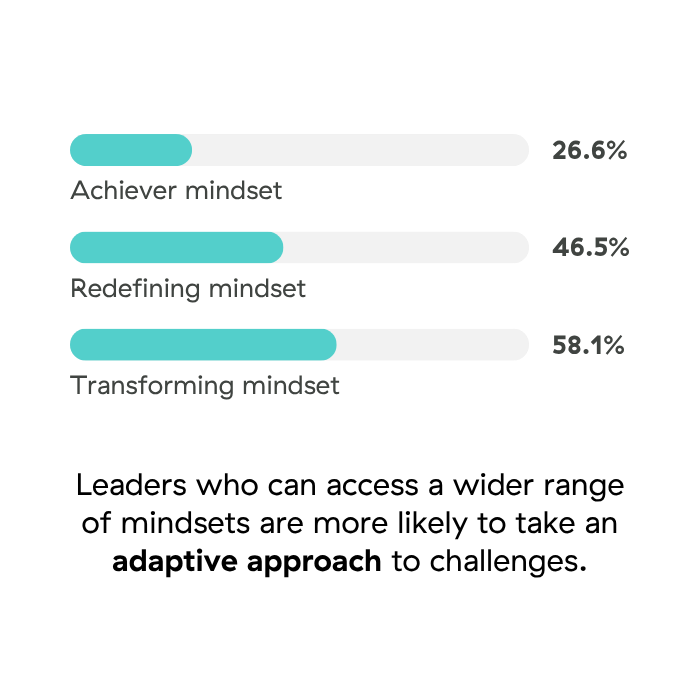
We’re seeing strong evidence that leaders who can view challenges through a wider range of perspectives are able to access more possibilities, and are considerably more effective than those who have a fixed way of thinking. Mindset development enables you to:
1. Develop capacity for complex challenges
2. Inspire behavior change and drive action
3. Enable resilience and adaptability
To team development.
Your team, like you, is limited by its collective mindset.
How do we develop and sustain a team’s capacity to be attentive, adaptive, and resilient in response to what comes at them? The answer lies in mindset development. This involves growing the team’s capacity to wake up to what works and what doesn’t. It also means building the skills and tapping the courage to engage in meaningful conversations to continually improve how team members work together to deliver on their purpose.
Traditional team development often focuses on changing behaviors and processes—how people work together. While valuable, we’ve found that this approach only provides temporary fixes. To achieve significant, substantive, and sustained impact, you must go deeper: you must address the mindsets that underlie and drive how the team functions.

Grow your team’s effectiveness.
While traditional team development focuses on behaviors, this insightful position paper from Jan Rybeck, MCC, and the Adeption team shows you how to unlock significant, sustained impact by addressing the underlying mindsets that drive team effectiveness.
In this free paper, you will get:
- A framework to clarify your team’s direction and approach.
- A map for developing your team’s mindset capacity to meet complex demands.
- Guidance, examples, and resources to build high-functioning teams.
- An introduction to the Five P’s of Effective Teaming: Purpose, Priorities, Performing, People, and Psychological safety.
- High-level perspectives on how teams operate at different LMI Mindsets (Opportunist, Diplomat, Expert, Achiever, Redefining, and Transforming).
Learn how to use mindset development to make your team more attentive, adaptive, and resilient.